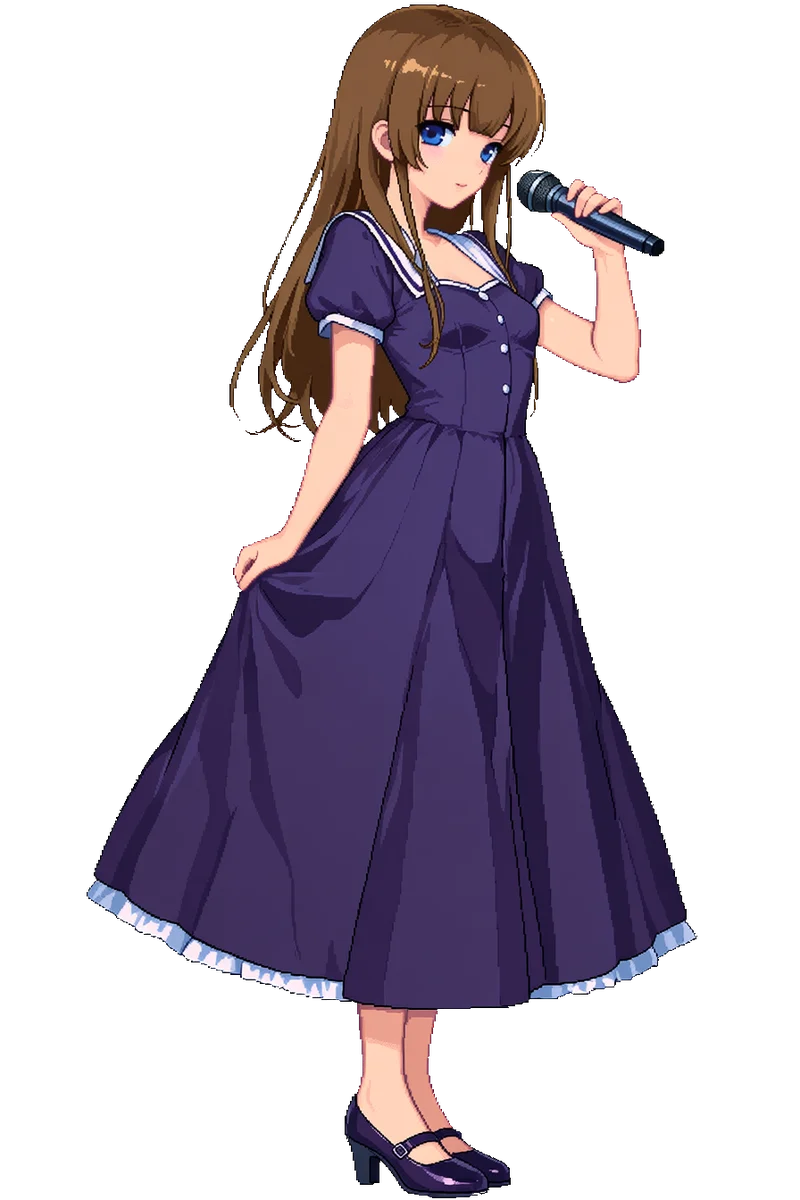
TV · 2011
Shouwa Monogatari
昭和物語 TV · Showa Monogatari TV · TV Manga Shouwa Monogatari
Dramatic story of the Yamazaki family during the year Showa 39 (1964), the year that Tokyo hosted the Summer Olympics.
MAL score
6.84
68.8% percentile
Rank
#5852
top anime
Popularity
#9047
all time
Members
6.2k
7 favorites
Characters
13
46 staff
Information
source: MALJapanese
昭和物語 TV
English
—
Aired
Apr 4, 2011 to Jun 26, 2011
Premiered
Spring 2011
Broadcast
Unknown
Source
Original
Rating
PG - Children
Duration
22 min. per ep.
Genres
Themes & demographics
Companies
Links
Related entries
source: MAL · 1| Relation | Title | Format |
|---|---|---|
| Summary | Shouwa Monogatari (Movie) | Movie |
Characters
source: MAL · 13 in this titleTY
Taichi Yamazaki
Main · 1 fav
Aoki, Makoto (Japanese)
YY
Yuuko Yamazaki
Main
Fukuen, Misato (Japanese)

Kouhei Yamazaki
Main
Chiba, Shouya (Japanese)
TK
Toshiya Kasai
Supporting
SM
Shinichi Miyamoto
Supporting
SO
Setsuko Ootani
Supporting

Yuusuke Sawatari
Supporting · 1 fav
Yoshino, Hiroyuki (Japanese)
RT
Ryou Takayanagi
Supporting
Takagi, Wataru (Japanese)
HT
Hiroko Takeguchi
Supporting
GT
Gorou Tashiro
Supporting
Tsukada, Masaaki (Japanese)
KY
Kanoko Yamazaki
Supporting
Tamagawa, Sakiko (Japanese)
YY
Yuuzou Yamazaki
Supporting
Matsumoto, Yasunori (Japanese)
YY
Yoshi Yamazaki
Supporting
Kyouda, Hisako (Japanese)
Staff
source: MAL · 46 credits
Takeuchi, Hiroaki
Producer
Kugimiya, Hiroshi
Director, Storyboard
Tougou, Mitsuhiro
Director

Honda, Yasunori
Sound Director

Ishikura, Kenichi
Episode Director, Assistant Director
Kimura, Takahiro
Episode Director
Mikamoto, Yasumi
Episode Director
Mikuriya, Kyousuke
Episode Director
Moritomo, Hiroki
Episode Director, Animation Director
Okajima, Kunitoshi
Episode Director
Okazaki, Yukio
Episode Director
Satou, Yutaka
Episode Director
Shiraishi, Michita
Episode Director
Hirano, Yasushi
Script, Series Composition

Maruo, Miho
Script

Tomita, Sukehiro
Script
Hamatsu, Mamoru
Storyboard
Matsui, Hitoyuki
Storyboard
Suzuki, Takuo
Storyboard

Kusunoki, Toshie
Theme Song Performance
Aihara, Satoshi
Editing

Dark Ducks
Inserted Song Performance

Duke Aces
Inserted Song Performance
Fujiki, Yukari
Color Design
Hashimoto, Katsumi
Animation Director
Hattori, Kenji
Animation Director
Hayashi, Miyuki
Director of Photography

Hirose, Kiyoshi
Editing
Huh, Seung Ki
Key Animation
Jo, Young-rae
Animation Director
Kawano, Kouichirou
Key Animation
Lee, Min-bae
Animation Director
Miyazaki, Asami
Key Animation

Nakayama, Atsushi
Director of Photography

Nishimura, Motohide
Animation Director, Key Animation

Saijou, Takashi
Animation Director
Satou, Michio
Animation Director
Suzuki, Takanori
Key Animation
Taira, Aiko
Background Art
Takahashi, Naoki
Animation Director
Watanabe, Emi
Key Animation
Watanabe, Kenichi
Animation Check
Yamatani, Naoto
Sound Effects
Yanagino, Tatsuo
Character Design, Chief Animation Director, Animation Director, Key Animation
Yasutome, Masaya
Key Animation
Yoshizaki, Makoto
Animation Director
MAL user recommendations
source: MAL · 4 titles
Ushiro no Shoumen Daare
1 rec
Shouwa Monogatari and the first half of Ushiro no Shoumen Daare are both slice of life stories about the lives of a working-class family set in Tokyo in the past (UnSD takes place in the 1940s, SM is set in 1964).
Recommended by squanchy_56

The titles make abundantly clear that both anime are set in the same time period, but while Shouwa Genroku Rakugo Shinjuu spans over several decades (approx. 1940-1980) focusing primarily on the traditional art of rakugo, Shouwa Monogatari tells the story of one family during a single year (1964).
Although the basic premise is different in both, each share a deep insight into the era, portraying the trials and tribulations of post-war daily life, new discoveries, the effect of changing times, and a myriad of cultural details that really bring the two stories to life.
The characterisation is done well both anime, and they depict the complicated relationships
between family (SM) and friends (SGRS) with much depth and realism that resonates with the historical backdrop.
SGRS is perhaps more sombre while SM retains more optimism, but both are excellent historical dramas.
read more
Recommended by fullmetalbender

Sakamichi no Apollon
1 rec
Same time period. While SM always includes popular music from Shouwa 39 (1964), SnA focuses on Jazz. There is some romance for the college boy and high school girl in SM but this is mostly slice of life based on the real daily experiences of a working class family in Tokyo during the year of the Olympics. SnA deals with the romantic and personal entanglements of four high school students. Both series have a nostalgic feel.
Recommended by rodac

Coquelicot-zaka kara
1 rec
Both works are set in the Showa period during which Japan experienced rapid modernization. Specifically, both occur around the time Tokyo hosted the 1964 Summer Olympics. While the two works have different approaches to introducing viewers to the Showa period, they portray the conflicts that occurred between the traditional Japanese society and those who would learn from Western cultures. These stories show the viewers how modernization affected the middle class who live in the suburbs of Tokyo.
Recommended by arsonal
Written by MAL users; this is separate from AniDB recommendations. Page 1 of 1 · 4 titles.
Theme songs
source: MAL · OP / ED| Type | Title | Artist | Episodes |
|---|---|---|---|
| ED | "Toukyou Gorin Ondo (東京五輪音頭)" | Haruo Minami | eps 1,13 |
| ED | "Utsukushii Juudai (美しい十代)" | Akira Mita | eps 2 |
| ED | "Nagaiki Chonpa (Funabashi Health Center) (長生きチョンパ (船橋ヘルスセンター))" | Toshie Kusunoki | eps 3 |
| ED | "Boku wa Nai Chicchi (僕は泣いちっち)" | Hiroshi Moriya | eps 4 |
| ED | "Aa Ueno Eki (あゝ上野駅)" | Hachirou Izawa | eps 5 |
| ED | "Hondara Koushinkyoku (ホンダラ行進曲)" | Hajime Hana & Crazy Cats | eps 6 |
| ED | "Koi no Vacance (恋のバカンス)" | The Peanuts | eps 7 |
| ED | "VACATION" | Mieko Hirota | eps 8 |
| ED | "Sudara Bushi (スーダラ節)" | Hitoshi Ueki | eps 9 |
| ED | "Furimukanaide (ふりむかないで)" | The Peanuts | eps 10 |
| ED | "Yoake no Uta (夜明けのうた)" | Youko Kishi | eps 11 |
| ED | "Nanimo Iwanaide (何も云わないで)" | Mari Sono | eps 12 |
Community ?
MAL /statsWatching428
Completed1,644
On hold395
Dropped536
Plan to watch3,161
Total6,164
Score position ?
against collectionScore percentile68.8%
Members percentile70.7%
Favorites percentile68.3%
Era context ?
5-year cohortRaw score6.84
Era percentile76.3%
Above era average+0.41
Era average6.43
Titles in cohort76
Franchise context ?
2 entriesFranchise average6.65
Score vs franchise+0.19
Rank inside franchise#1 of 2
Compared with 2 related anime entries, not the whole collection.
Completeness
catalogue coverageCast 13 characters
Staff 46 credits
Profiles 13/13
Portraits 2/13
Statistics available