Momo e no Tegami
Movie · 2012

Momo e no Tegami

A Letter to Momo · ももへの手紙 · Ein Brief an Momo · Lettre à Momo · Momo e no Tegami · Una Carta para Momo
Finished Airing 1 episodes 2 hr. G - All Ages stats available AniDB 7.45 MAL ↗

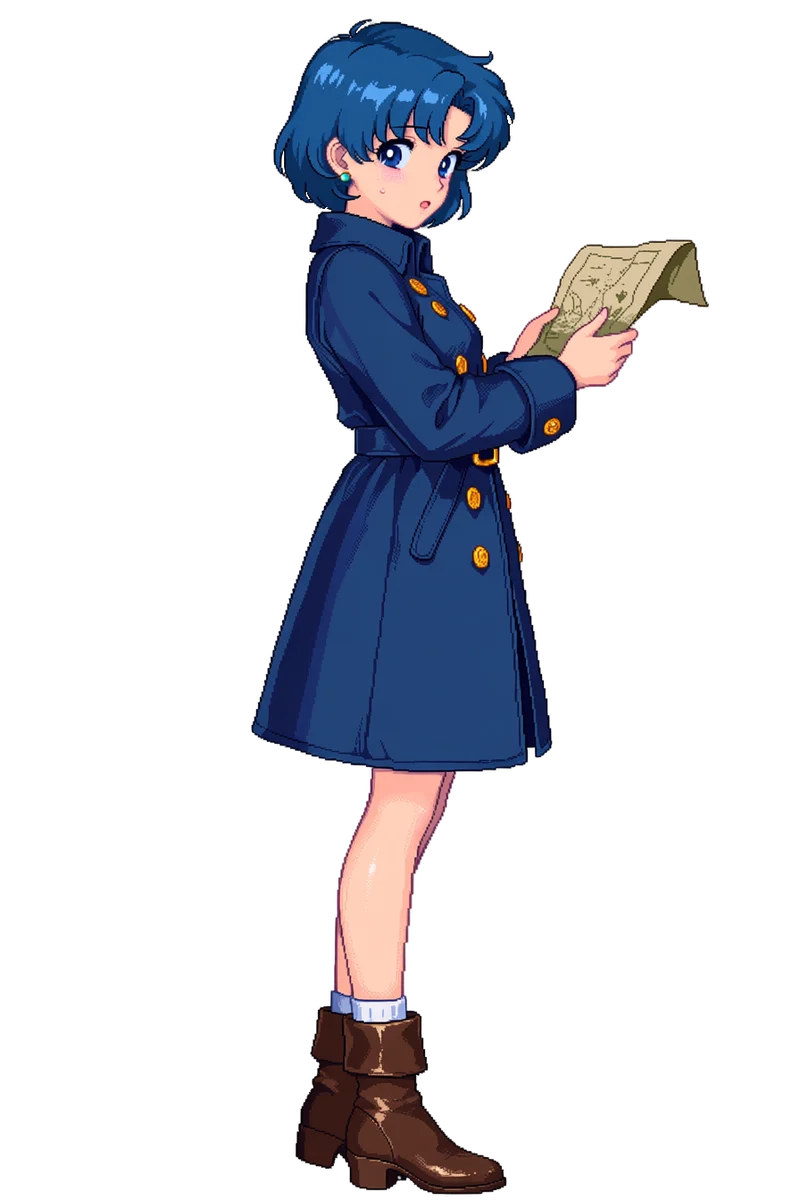
After her father dies unexpectedly, 11-year-old Momo Miyaura leaves Tokyo with her mother and moves to an old, remote island in the Seto Inland Sea. Her only memento of her father is an unfinished letter containing just two words, "Dear Momo"—and the unrest it leaves in her heart. In the unfamiliar small town, Momo reluctantly tries to adapt to the outdated wooden buildings, the silent crop fields, and the mysterious isolated shrines. One day, while exploring the attic of her new home, she comes across a worn-out picture book about youkai. After that discovery, strange things start happening around town, and Momo is greeted by three troublesome youkai. Momo e no Tegami tells the story of a young girl struggling to adjust to her bizarre new life and, in the end, to come to terms with her father's mysterious letter.

paraphrased
MAL score
7.57
90.4% percentile
Rank
#1927
top anime
Popularity
#2606
all time
Members
91.8k
195 favorites
Characters
11
118 staff

Information

source: MAL
Japanese
ももへの手紙
English
A Letter to Momo
Aired
Apr 21, 2012
Premiered
—
Broadcast
—
Source
Original
Rating
G - All Ages
Duration
2 hr.
Genres
Themes & demographics
Companies
Links
AniDB tags · source: AniDB
Background paraphrased
The Toronto International Film Festival hosted the world premiere of the anime film A Letter to Momo (Momo e no Tegami), as part of the TIFF Kids program of the September 8-18, 2011 event. At the 14th Future Film Festival, held in Italy in 2012, the film took the Future Film Platinum Grand Prize. It also earned the 2012 Asia Pacific Screen Award for Best Animated Feature Film.

Related entries

source: MAL · 1
RelationTitleFormat
Adaptation (Manga)Momo e no TegamiManga

Characters

source: MAL · 11 in this title

Staff

source: MAL · 118 credits
Matsushita, Keiko
Producer, Production Manager
Okiura, Hiroyuki
Director, Script, Storyboard, Character Design, Original Creator
Wakabayashi, Kazuhiro
Sound Director
Kusumi, Naoko
Episode Director
Hasegawa, Nahoko
Script, Screenplay
Amano, Kazuko
In-Between Animation
Andou, Masashi
Animation Director, Key Animation, Character Design
Aoyama, Hiroyuki
Key Animation
Arai, Kouichi
Key Animation
Araki, Ryou
In-Between Animation
Bourguet, Lionel
ADR Director
Chiba, Takahiro
Key Animation
Daidouji, Miho
In-Between Animation
Fujita, Ayano
In-Between Animation
Gekidan Inu Curry
Digital Paint, Key Animation
Hamasu, Hideki
Key Animation
Harisaki, Yoshihito
Background Art
Haryuu, Katsufumi
Background Art
Hashimoto, Takanori
In-Between Animation
Hata, Ayako
Key Animation
Honda, Takeshi
Assistant Animation Director, Key Animation
Honma, Akira
Assistant Animation Director, Key Animation
Ii, Osamu
Background Art
Iiyama, Nahoko
In-Between Animation
Ikeda, Yuki
In-Between Animation
Imai, Arifumi
Key Animation
Inoue, Ei
Assistant Animation Director, Key Animation
Inoue, Toshiyuki
Key Animation, Assistant Animation Director
Inoue, Shinya
Key Animation
Ishikawa, Mariko
Key Animation
Ishikawa, Michiru
Executive Producer
Isom, Arthell
Background Art
Itou, Hideki
Key Animation
Iwakuma, Akane
Background Art
Katagiri, Takahisa
Key Animation
Kawaguchi, Hiroshi
Key Animation
Kawashima, Yuuki
Key Animation
Kimura, Takahiro
Key Animation
Kise, Kazuchika
Key Animation
Kiyoike, Naho
In-Between Animation
Komaru, Toshiyuki
Key Animation
Komori, Takahiro
Key Animation
Kubota, Chikashi
Key Animation
Kurashima, Ayumi
Key Animation
Mamezuka, Asuka
In-Between Animation
Mannen, Asami
In-Between Animation
Matsumoto, Kengo
In-Between Animation
Mitsunaka, Susumu
Key Animation
Miyagi, Ryou
In-Between Animation
Miyazaki, Tsukasa
In-Between Animation
Mizuta, Nobuko
Color Design
Morita, Hiroyuki
Key Animation
Mukouda, Takashi
Key Animation
Murayama, Akiko
In-Between Animation
Nagai, Kazuo
Background Art
Nakayama, Tomoyo
In-Between Animation
Naminoue, Yuri
In-Between Animation
Nishida, Tatsuzou
Key Animation
Nishiguchi, Tomoya
In-Between Animation
Nishio, Tetsuya
Key Animation
Noguchi, Tooru
Sound Effects
Nomura, Kazuya
Key Animation
Numata, Kumiko
In-Between Animation
Oga, Kazuo
Background Art
Ogawa, Mai
In-Between Animation
Ogura, Hiromasa
Background Art
Ohira, Shinya
Key Animation
Okumura, Masashi
Key Animation
Ookubo, Tooru
Key Animation
Oono, Hiroshi
Setting, Art Director, Background Art
Oshiyama, Kiyotaka
Key Animation
Saitou, Takuya
Key Animation
Saitou, Hisako
Background Art
Sameshima, Kiyoshi
Background Art
Seguchi, Izumi
Key Animation
Shimizu, Hiroshi
Key Animation
Shinoda, Tomohiro
Key Animation
Shiraishi, Ayumi
Key Animation
Sinterniklaas, Michael
Recording Engineer, ADR Director
Suetomi, Shinji
Key Animation
Suganuma, Fumihiko
In-Between Animation
Sugita, Marumi
In-Between Animation
Sumiya, Osamu
In-Between Animation
Suzuki, Shunsuke
Background Art
Suzuki, Asuka
In-Between Animation
Takahashi, Hideki
Key Animation
Takahashi, Yasuko
In-Between Animation
Takata, Akira
Key Animation
Takenaka, Shingo
In-Between Animation
Takeuchi, Atsushi
Key Animation
Takiguchi, Teiichi
Key Animation
Tanaka, Kouji
Director of Photography
Tanaka, Takahiro
Key Animation
Tatsuta, Ichirou
Background Art
Terakawa, Hidekazu
Production Coordination
Tokuno, Yuuga
Key Animation
Tomita, Mari
In-Between Animation
Wada, Takuya
In-Between Animation
Watanabe, Haru
In-Between Animation
Watanabe, Ai
In-Between Animation
Yamada, Katsuya
Key Animation
Yamada, Makoto
Key Animation
Yamaguchi, Akiko
Key Animation
Yamakawa, Akira
Background Art
Yashima, Sachiko
In-Between Animation
Yoshida, Fumiko
Key Animation
Yoshinari, Yoh
Key Animation
Yoshioka, Seiko
Background Art

AniDB episodes

source: AniDB · 14
#TitleAiredLengthRating
1 Complete Movie
The last time Momo saw her father they had a fight - and now all she has to remember him by is an incomplete letter, a blank piece of paper penned with the words Dear Momo but nothing more. Moving with her mother to the remote Japanese island of Shio, Momo soon discovers three yokai living in her attic, a trio of mischievous spirit creatures that only she can see and who create mayhem in the tiny seaside community as she tries desperately to keep them hidden. But these funny monsters have a serious side and may hold the key to helping Momo discover what her father had been trying to tell her. Source: crunchyroll
2011-09-10 120 min 8.49
7 votes
T1 special Teaser Trailer (0:52) — 1 min —
T2 special Trailer (2:51) — 3 min —
T3 special TV Spot (Story & Yokai Versions) (0:47) — 1 min —
T4 special Hiroshima Prefecture TV-CM "Setouchi Hiroshima, Takarashima x A Letter to Momo" (2:17) — 3 min —
T5 special Glico Cafe Ore TV-CM (0:18) — 1 min —
T6 special BD & DVD TV-CM (0:18) — 1 min —
T7 special BD & DVD Promotion Video (1:57) — 2 min —
S1 special Making of Film (38:18) — 39 min —
S2 special A Letter to Momo Special Discussion (25:11) — 26 min —
S3 special Test Film (1:07) — 2 min —
S4 special Production Three Girls Introductory Chapter Production Talk (6:51) — 7 min —
S5 special Production Three Girls Introductory Chapter Momo Talk (13:46) — 14 min —
C1 special Ending — 5 min —

AniDB creators

source: AniDB · 10 credits
NameRoleAniDB
Okiura HiroyukiDirection#4500
Production I.GAnimation Work#721
Okiura HiroyukiCharacter Design#4500
Andou MasashiCharacter Design#4486
Okada ArimasaProducer#33114
Matsushita KeikoProducer#37389
Mukaichi MotokiProducer#24642
Okiura HiroyukiOriginal Plan#4500
Kubota MinaMusic#4441
Noguchi MarikoProducer#60588

MAL user recommendations

source: MAL · 23 titles
Before watching 'When Marnie Was There', I would have described 'A Letter To Momo' as the Ghibli film that Ghibli would never create: a film grounded in reality by the relatable social anxiety / awkwardness of a young girl, with a fantasy aspect in the background. Not a magical adventure with Miyazaki's trademark lack of characterisation-reality attentiveness--a film with a very real emotional undercurrent people can relate to. And although Marnie is most certainly not a Miyazaki film (which I am eternally grateful for after enduring 'The Wind Rises'...), it most certainly is a Ghibli film. A nice way for Ghibli to end their anime love affair, if it is indeed to be their last. Both films involve heroines you could describe as anti-social moving to rural settings, with family difficulties being a key theme. Then, a supernatural aspect in Momo and more of an imaginary aspect in Marnie gets used to develop the characters and resolve the respective family issues. Momo was more cohesive in terms of blending the social woes with fantasy, where as Marnie was more of a tug of war between social anxiety and imaginary friendship; with an artificial seeming end. But one listen of Marnie's beautiful end credit music, when paired with how it started, and I can't help but link the two. read more
Recommended by AironicallyHuman
As movies, Marnie and Momo are actually quite reminiscent of one another. Starting from the atmospheric storytelling, to the young girls as leads, as well as the themes of familial bond and the inner struggles of growing up. Both have similar settings in picturesque rural areas, where they relocate. While Momo has supernatural elements, Marnie has a slight mystery to it.
Recommended by fullmetalbender
Two girls are sent to a rural setting for separate reasons where they have a coming of age experience that deals with the supernatural. While Momo e no Tegami deals straight with supernatural beings, When Marnie was There has a sort of magical realism feel to it. The struggles and growing up the two main female leads do in their respective movies are very reminiscent of each other. I recommend both movies highly.
Recommended by Hamaneko
Teenage girl having difficulties with their lives move to countryside and have certain unusual encounters which help them to move on.
Recommended by Manganatic
Very similar feel and themes in both movies although quite distinct in terms of narrative, high production values that is a given for Ghibli and Production IG, and heavy overlap of animation staff between the two - not least 'Momo' director Okiura himself contributing Key Animation on 'Marnie' as well.
Recommended by dograzor
They both have the same kind of idea; a young girl moving to a new town against her own will while befriending spirits along the way. Both involve saving parent(s).
Recommended by palmon
Both movies have a young girl moving into a new home and meeting with strange supernatural creatures that help them save their parent(s).
Recommended by Silverin
Two stories about overly cautious young girls growing up and learning to be brave through their encounters with spirits and mythical creatures. Spirited Away has more of an immersion into the spirit side of things. A Letter to Momo focuses more on the family aspect. But I definitely saw similarities between Momo and Chihiro-- the two protagonists.
Recommended by Duckielover151
Both films show the encounter of the girl with a group of Yokai giving way to an adventure to save the family of both protagonists. The protagonists have many physical and emotional similarities. Sen to Chihiro no Kamikakushi - - - Momo and No Tegami Chihiro Ogino - - - Momo Miyaura
Recommended by Rising_Sun
The other day, I was reading an article about Miyazaki. If I'm recalling correctly, it was mentioned how a member of his staff had argued with him during the production of Spirited Away about how its heroine should've acted more hesitant and fearful when confronted with monsters. I'm mentioning this because I think this disagreement touches upon my biggest gripe with Miyazaki's 'kiddy flicks': they lack a relatable human edge that would've allowed me to become involved. For example, I was re-watching Laputa a week or so back and it struck me how, in real life, a girl would be left SOMEWHAT traumatised by falling from an airship and being pursued by a group of military nasties. But, in Miyazaki's world, everyone is all happy-happy, smiley-smiley, and while that might work when viewed through children's eyes, it doesn't cut it with me. And this brings me to Momo. If memory serves, the person that disagreed with Miyazaki during Spirited Away also worked on Momo. Maybe that's a coincidence and is entirely irrelevant but, regardless, Momo is a lot closer to my ideal take on the 'girl meets magical creatures after moving to the middle of nowhere' premise. To be human is to be troubled and troubled is an apt way to describe Momo's titular heroine. She avoids social contact, rarely displays emotion, is uptight, unhappy to find herself relocated and deeply regrets the last words she aimed at her father before his death. Her struggles with life also went hand-in-hand with her reaction to finding herself housed with monsters; first running as far away as possible before attacking them when confronted. And, for me, her realistic behaviour both better relates to modern life than Ghibli's older, more child friendly offerings and works better as a consequence. As for Totoro and why I'm linking it to Momo: it shares the most similar premise out of Miyazaki's films. read more
Recommended by AironicallyHuman
Both movies have children moving to a new home, one in the countryside and the other on a secluded island, with the similar scenery of quiet everyday human life alongside nature. Both movies have supernatural elements that only the children are able to see and interact with.
Recommended by Silverin
Young girls interact with supernatural beings in the countryside.
Recommended by Manganatic
Both are summer stories taking place in the Japanese countryside centering a young girl with the ability to speak with spirits and both are really lighthearted and touching.
Recommended by Tunatabi
Both are movies about a young girl who's forced to go to her grandparent's during the summer, but doesn't want to because they live in a remote place. However, they rejoice after finding fantastic creatures and make friends around town.
Recommended by PlzAllow
Both A Letter To Momo and Miyori’s Forest feature a female protagonist, both of which initially have similar personalities. Both protagonists move to rural Japan to live with older relatives after the absence of a parent. While both are G rated supernatural dramas, Midori’s Forest focuses on environmentalism and spirits and A Letter To Momo is centered around inner conflict and youkai. Both protagonists use spirits and youkai to accomplish their goals in these two coming of age movies.
Recommended by bleedingsphinx
Although not too alike in terms of story, both anime involve a main character who is able to see beings that others cannot. In fact, they make connections with these beings and throughout the anime, both good and bad fortune comes along with it. Both movies also follow a somewhat slice of life style type of story with a gentle touch of soft rhythm. Yes, there is also the theme of youkai involved in both anime which are present. They are the supernatural beings from the anime that other people cannot see while the main character can; supernatural addition. Both anime have a slow pacing but are enjoyable by the way it is presented through its backgrounds. read more
Recommended by Stark700
Both shows deals with a human MC that is the only person who can see Yokai, the funny situations created because of this are very similar.
Recommended by HappyNeko
Both stories follow a likeable loner protagonist who can see and talk with mischievious supernatural yokai. The landscape also gives both shows a pleasant feel, and despite the supernatural elements, both shows remain relatable slice-of-life stories.
Recommended by midlandiania
Written by MAL users; this is separate from AniDB recommendations. Page 1 of 5 · 23 titles.
Open on MAL

AniDB user recommendations

source: AniDB · 3
For Fans AniDB user #418149
It`s a classical movie. Not bad, a good animation work by IG prod, but not surprising at all. I wasn`t bored but I would probably not watching it again.
Recommended AniDB user #376027
A classic grow-up/moving-on story, executed beautifully. Its in the details of the backgrounds together with the music that makes it a really believable world and lets you immerse in the story. The only remark i got is about the ending, it doesn`t make much sense if you think about it, but acceptable if you just go with the flow.
Must See AniDB user #599558
Masterpiece Just watch and enjoy. countryside anime very relaxing. as good as only yesterday(ghibli) and wolf children.
AniDB user text; not mixed with MAL recommendations. Page 1 of 1 · 3 total.

Theme songs

source: MAL · OP / ED
TypeTitleArtistEpisodes
ED"Uruwashimahoroba ~Utsukushiki Basho~ (ウルワシマホロバ~美しき場所~)"Yuuko Hara—

AniDB rating

source: AniDB · aid 8270
Permanent score7.45
Votes1,435
Temporary score7.50
Temporary votes1,438
AniDB typeMovie
Start / end2011-09-10 – 2011-09-10
AniDB voters are a different population from MAL. This score is not merged into the MAL score above.
Open on AniDB

Community ?

MAL /stats
Watching2,197
Completed49,448
On hold972
Dropped500
Plan to watch38,683
Total91,800

Score position ?

against collection
Score percentile90.4%
Members percentile91.6%
Favorites percentile89.9%

Era context ?

5-year cohort
Raw score7.57
Era percentile63.9%
Above era average+0.30
Era average7.27
Titles in cohort36

Completeness

catalogue coverage
Cast 11 characters
Staff 118 credits
Profiles 11/11
Portraits 11/11
Statistics available

Similar titles

source: MAL · shared AniDB tags

AniDB similar anime

source: AniDB
AniDB approval 27/34
AniDB approval 7/14
AniDB approval 6/20
AniDB approval 3/5

AniDB resources

source: AniDB